
 Search
 Pioneer of Tibet Tourism for Overseas Travelers since 1984!

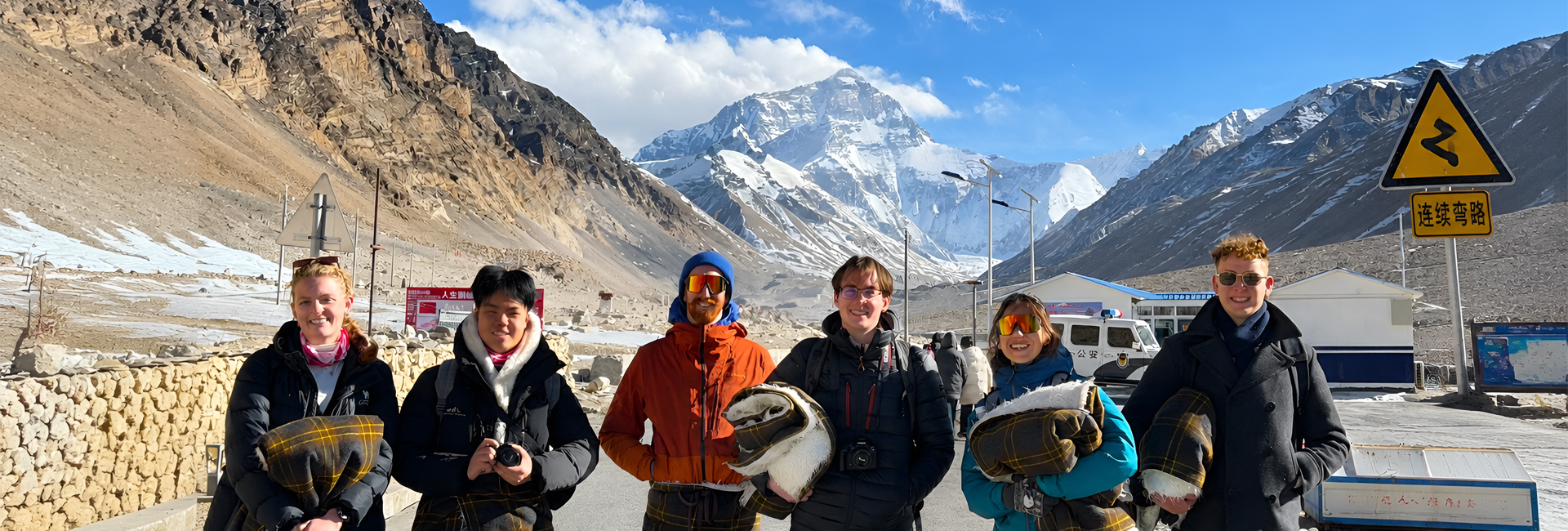
Tibetan prostration is one of the most unique spiritual practices you can witness in Tibet. From Barkhor Street in Lhasa to the remote Mount Kailash, you may see pilgrims performing full-body prostrations at sacred sites as part of their spiritual journey.
Some travel for weeks or even months to reach their destination. Some are elderly, and some travel with their families. Behind every prostration is a story of faith, devotion, and hope. Learning about this tradition offers a deeper understanding of Tibetan Buddhism and its connection with everyday life in Tibet.
What Is Tibetan Prostration and Why Do It?
Prostration is a traditional Buddhist practice. It is a way to show respect and devotion. During a prostration, people kneel down, stretch their bodies forward, and touch the ground with their hands and forehead. They then stand up and repeat the movement.
This full-body movement is known as Tibetan prostration. It has been practiced in Tibetan Buddhism for centuries. The practice is also related to the Sanskrit term “Namas Kara”, which means “bow” or “homage”.
In Tibetan Buddhism, prostration is an important spiritual practice. It shows respect for the Buddha, Buddhist teachings, and the spiritual community, known as the Triple Gem. Many Tibetans believe that prostration helps purify the mind, reduce negative thoughts, and develop compassion and inner peace.
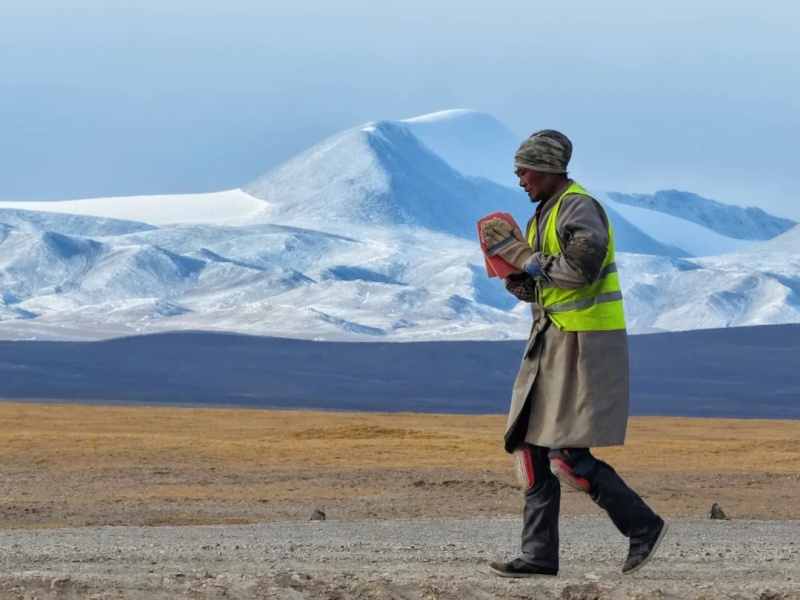
A Tibetan pilgrim performs prostration near the sacred Namtso Lake.
How Tibetan Prostration Is Performed
Tibetan prostration is a careful and repeated movement. Each step has its own meaning in Tibetan Buddhist tradition. A complete prostration usually includes standing, kneeling, stretching the body forward, and standing up again.
Step 1: Standing with Hands in Prayer Facing a Sacred Site
The pilgrim stands facing a sacred place and places the hands together in a prayer gesture. The hands are raised to the head and brought back to the chest.
This action represents respect through the body, speech, and mind. Many pilgrims also quietly recite prayers or mantras during the process.
Step 2: Lowering onto the Knees
The pilgrim bends forward and lowers both knees to the ground. They have repeated the movement thousands of times, so it has become second nature to them.
During long journeys, some pilgrims wear thick aprons and wooden hand covers. These protect their clothes and hands from rough roads. Near Jokhang Temple, the sound of wooden pads touching the ground can often be heard as pilgrims continue their prayers.
Step 3: Making a Full-Body Prostration
Next, the pilgrim stretches the whole body forward until it touches the ground. Their arms extend above the head, and their forehead reaches the ground. This is the main part of the prostration. It shows humility, respect, and devotion.
Step 4: Standing Up and Repeating
After touching the ground, the pilgrim stands up and starts the movement again. During long-distance pilgrimages, this practice is repeated many times along the journey.
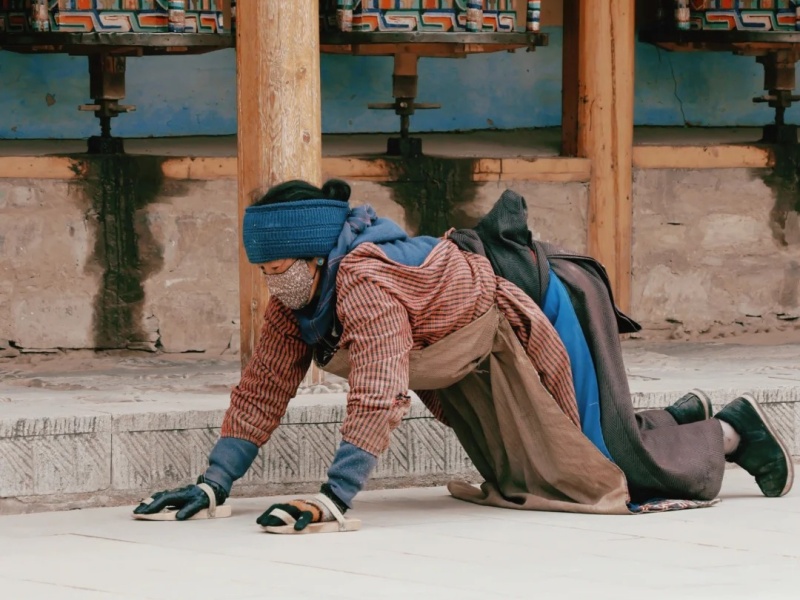
A Tibetan pilgrim performs a full-body prostration as part of a traditional Buddhist pilgrimage practice.
Best Places to See Tibetan Prostration in Tibet
Tibetan prostration can be seen at many sacred places across Tibet. For travelers, the most meaningful places to experience this tradition are around Jokhang Temple in Lhasa, along the Mount Kailash kora route, and on long-distance pilgrimage routes such as the G318 Sichuan-Tibet Highway.
Barkhor Street & Jokhang Temple pilgrimage route
Barkhor Street is one of the best places to see Tibetan prostration in Tibet. Located around Jokhang Temple, this area is the spiritual heart of Lhasa and an important pilgrimage site for Tibetans.
From early morning until late at night, pilgrims from different parts of Tibet come here to walk the kora around Barkhor Street, turn prayer wheels, and make full-body prostrations in front of the temple.
Along the street, visitors can see people of different ages practicing this tradition with quiet devotion. The sound of prayers, prayer wheels, and the movement of pilgrims create a unique atmosphere that reflects daily religious life in Lhasa.

Tibetan pilgrims perform full-body prostrations in front of Jokhang Temple.
Mount Kailash kora route
The Mount Kailash kora is one of the most sacred pilgrimage journeys in Tibet. Mount Kailash is considered one of the holiest mountains in Asia, and many pilgrims believe that completing the 52-kilometer kora around the mountain brings spiritual benefits and blessings.
Most pilgrims complete the route on foot, but some devoted pilgrims travel the entire circuit through full-body prostrations. Depending on weather and trail conditions, this journey can take several weeks.
Even at high altitude, these pilgrims continue step by step along the mountain route. Their dedication makes Mount Kailash one of the most unforgettable places to witness Tibetan prostration.
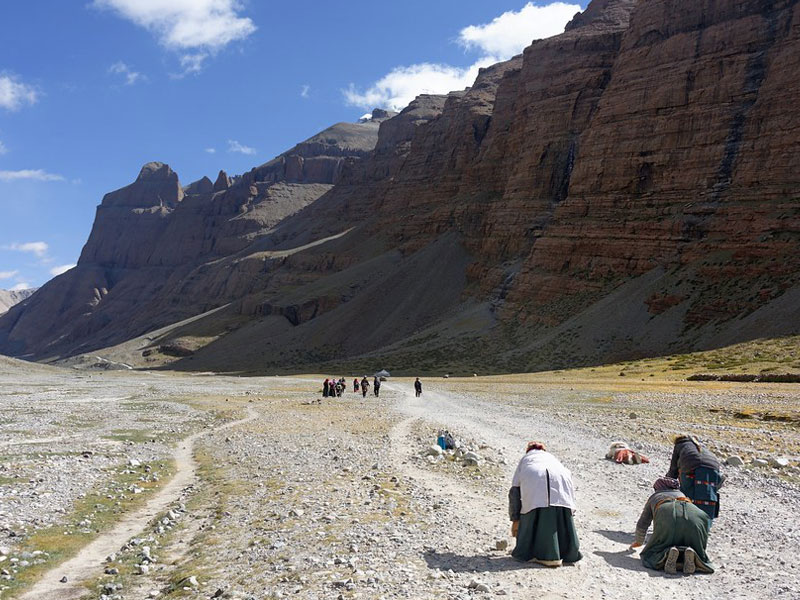
Tibetan pilgrims perform prostrations during the sacred Mount Kailash kora.
G318 Sichuan – Tibet Highway
The G318 Sichuan-Tibet Highway is another place where travelers may see Tibetan pilgrims on their pilgrimage journey toward Lhasa and other sacred places in Tibet. Some pilgrims travel hundreds or even thousands of kilometers from their hometowns as part of their pilgrimage.
This is a challenging journey that can take months to complete. Along the way, pilgrims may face rain, snow, strong winds, and intense sunlight. Many also wear protective gear, such as wooden hand covers and thick aprons, to protect themselves during long-distance prostrations.
When tour vehicle passes these pilgrims, people always slow down and give them plenty of space. Their journey deserves respect, and watching them reminds us that Tibet is not only about beautiful scenery but also about deep spiritual traditions and faith.
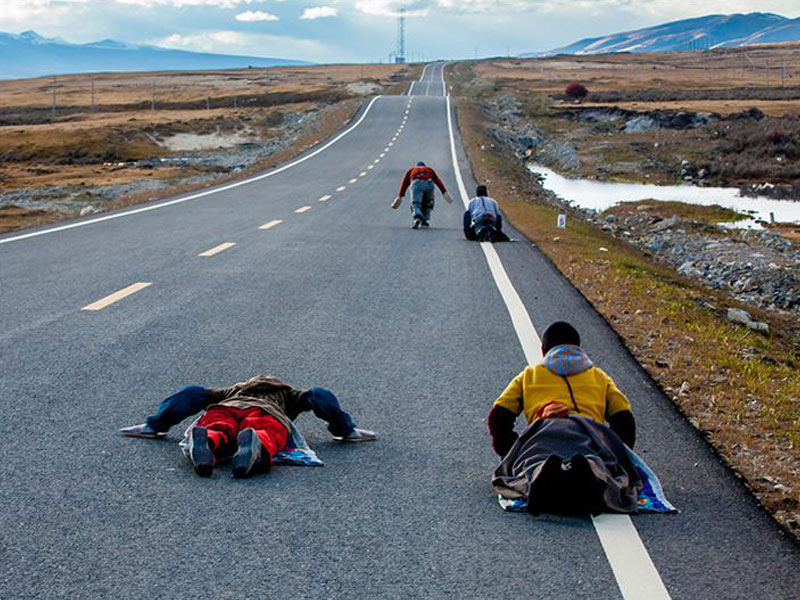
Tibetan pilgrims perform prostrations along the Sichuan-Tibet Highway to Lhasa.
Trying Tibetan Prostration During Your Tibet Tour
You can learn and try Tibetan prostration during your Tibet tour. However, it is important to approach this tradition with respect. Tibetan prostration is a meaningful Buddhist practice, not just a simple movement or a cultural experience.
With help from a local Tibetan guide, you can learn the basic movements and try a short practice in a suitable place. You may also use simple protective gear, such as aprons and wooden hand pads, which help protect your hands and body during the practice.
Since Tibetan prostration requires physical strength and can be demanding at high altitude, it is better to try it after spending enough time in Lhasa to adjust to the altitude. Take it slowly and stop if you feel uncomfortable.
Watching Tibetan Prostration with Respect (Traveler Friendly Tips)
Watching Tibetan pilgrims do prostrations can be a meaningful experience during your Tibet trip. Showing respect and giving them enough space allows you to better appreciate this tradition.
Keep a comfortable distance and avoid standing directly in front of someone who is praying. If you would like to take photos or videos, always ask for permission first and make sure you are not interrupting the pilgrimage or blocking the path. A quiet photo from the side is usually much more respectful than getting too close.
Keep your voice low, especially around places like Jokhang Temple and other active religious sites. If you are traveling to Tibet with children, encourage them to watch quietly and avoid running through kora routes.
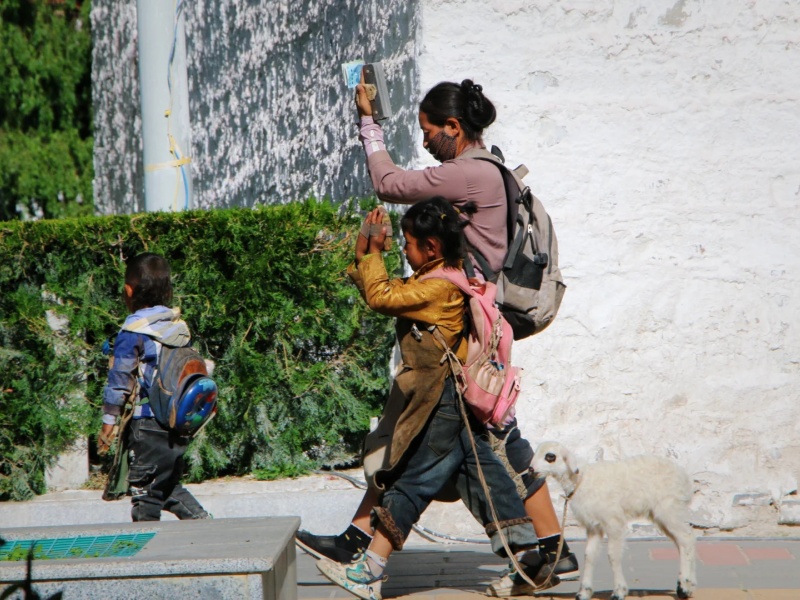
Respect local Tibetan religious practices and keep a comfortable distance when people are praying.
Conclusion
Tibetan prostration is more than a physical movement. For centuries, it has been an important part of Tibetan life and Buddhist practice, showing the faith, humility, and dedication of pilgrims across Tibet.
From Jokhang Temple in Lhasa to the pilgrimage routes around Mount Kailash, this tradition remains a meaningful part of Tibetan culture today. Understanding its meaning can help you see Tibet from a deeper perspective.
If you are planning a Tibet trip and would like to learn more about Tibetan culture, feel free to contact our local travel experts anytime. We are happy to help you plan your Tibet journey.

"Tibetan Prostration: A Way to Feel the Inner Buddha Nature in you"